

About the Company: Rosenberger Hochfrequenztechnik, founded in 1958 and headquartered in Fridolfing, Germany, is a global leader in high-frequency and fiber-optic technology. The company offers a diverse range of products including high-speed interconnects, fiber-optic solutions, and specialized components for automotive and medical technology. With operations in over 60 countries, Rosenberger serves various industries such as telecommunications, automotive electronics and medical technology.
The Challenge
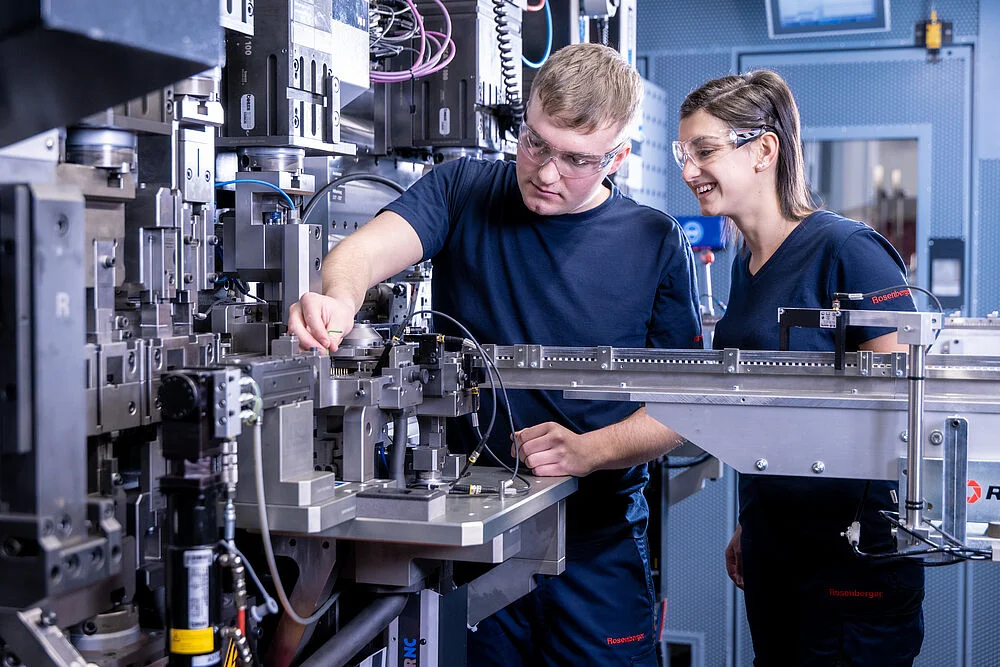
As Rosenberger continues to expand its global operations across Europe, Asia, North and South America, and Africa (15,000+ employees), the need to standardize onboarding practices becomes critical. Over time, the company increasingly faced challenges in providing consistent, shopfloor-ready training across multiple plants and countries, particularly for new hires in assembly and production.
Personal training sessions, while effective, were time-consuming and costly because they depended on local experts being on site and available. Additionally, language barriers created a practical execution gap, especially in plants where teams speak a mix of German, English, local languages, and less common mother tongues, making it hard to ensure that training materials were understood the same way everywhere.
Repetitive processes in production and assembly require clear, step-by-step, ISO-ready documentation to minimize errors, avoid rework, and stabilize standard work. As a result, Rosenberger sought after a solution to standardize training content, reduce the reliance on in-person expert coaching, and bridge the language barriers to improve execution consistency, maintenance responsiveness, and overall productivity across international locations.
The Decision
To address these challenges, Rosenberger decided to implement Clypp. This decision was driven by the software’s ability to empower employees to create and share informative video tutorials with just a few clicks, without requiring specialist video editing skills that previously limited creation to only a small group.
By leveraging this solution, Rosenberger aimed to reduce the number of on-site training sessions and “expert waiting time” allowing trainers and specialists to focus on higher-value problem solving and process improvements instead of repeating the same instructions. Furthermore, Clypp’s video-sharing platform promised to replace scattered distribution via email or time-limited sharing tools with one centralized space to manage, edit, and access internal process knowledge.
Implementation
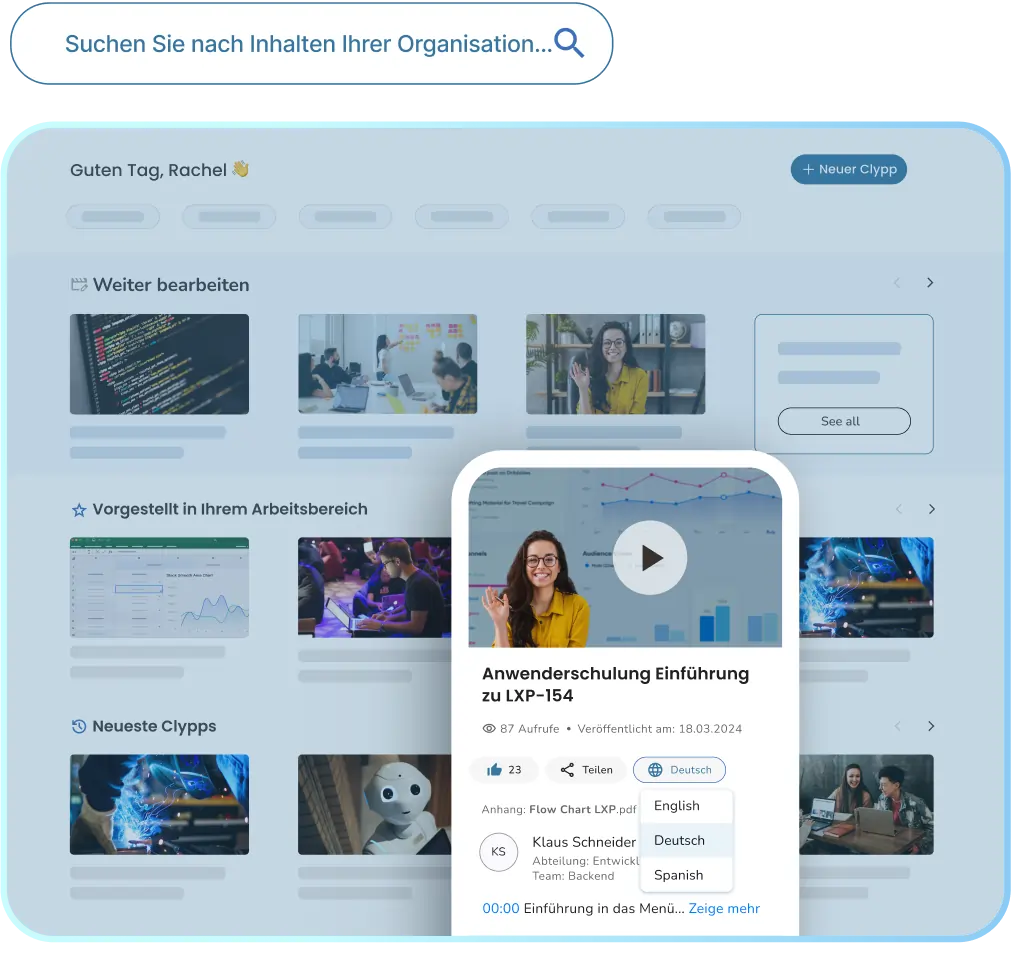
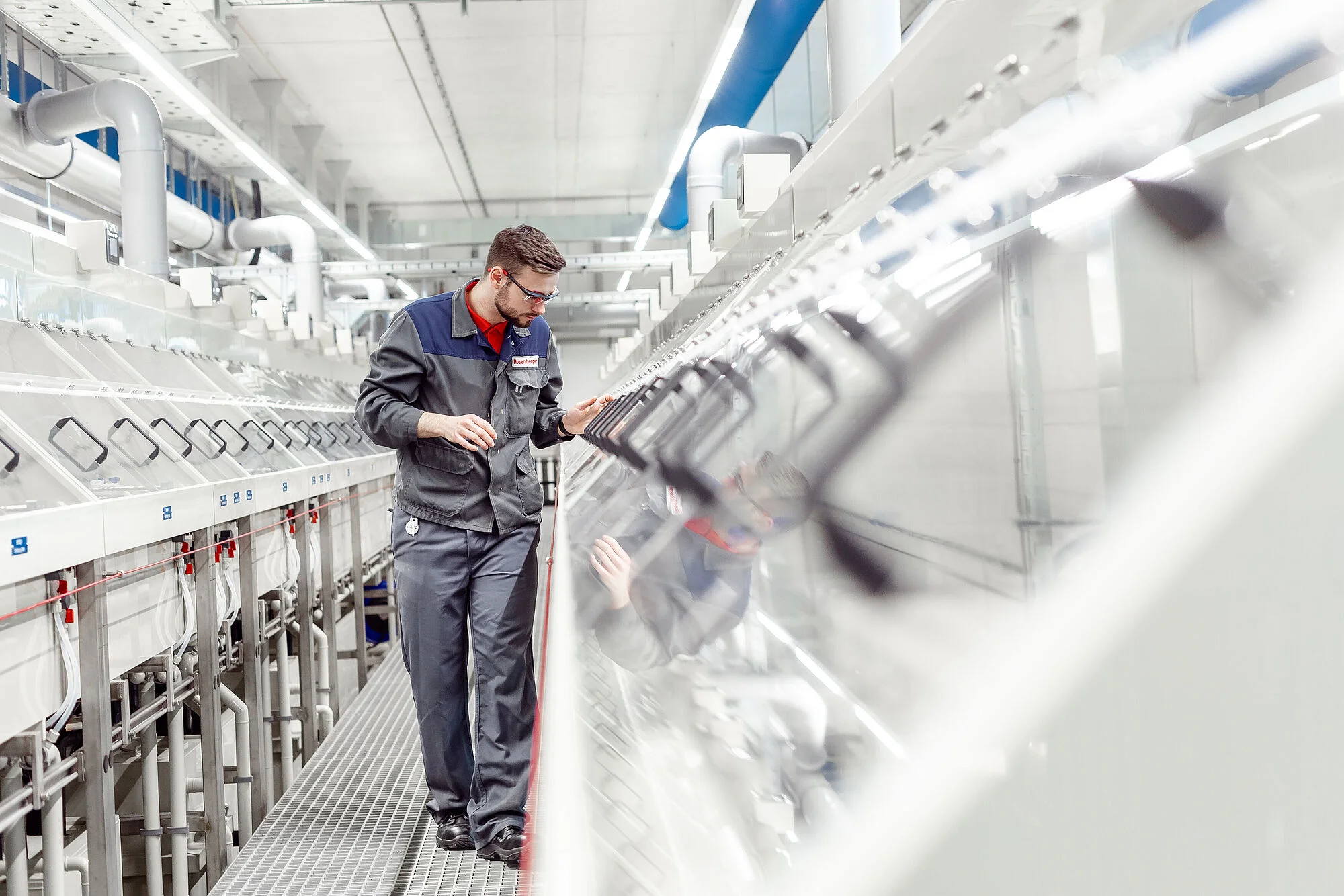
The implementation of Clypp at Rosenberger in 2023 marked a significant shift in their approach to training and process standardization. The user-friendly interface enables employees to create intuitive and engaging video tutorials that are used for onboarding new hires, documenting assembly instructions (for example, how to assemble a module and which mistakes to avoid), and supporting maintenance and troubleshooting when experts are not on site.
A key implementation principle was modularization: instead of one long training video, Rosenberger splits complex processes into short, step-based Clypps so employees can find and replay exactly the needed step (for example, “step 3” or “step 4”) without searching through a long timeline.
The AI voice-over and translation features ensure that video content can be consumed in the viewer’s preferred language, including less common languages required in specific plants, reducing misunderstandings and increasing acceptance on the line. This is particularly beneficial for Rosenberger’s international operations, supporting consistent execution across sites in Germany, Hungary, Tunisia, Indonesia, China, India, the USA, and Mexico.
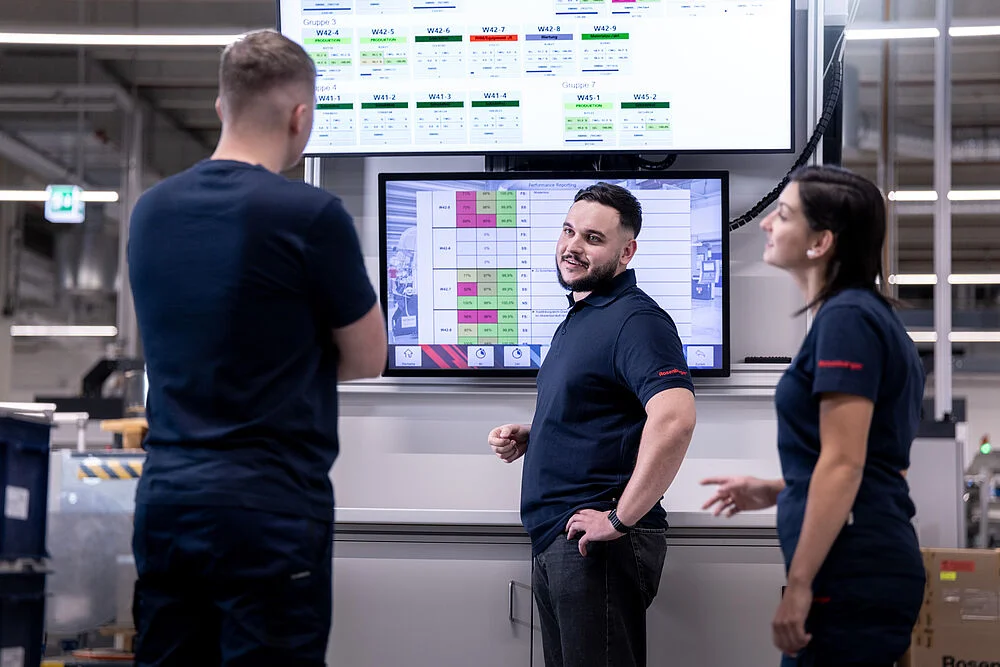
The seamless integration of the software into Rosenberger’s existing systems, including MES access in the production line and site-specific playback setups such as large screens, enabled a smooth transition and fast adoption by employees across different roles and tenure levels.
"Instead of distributing videos via email or relying on long documents, our teams now create short, step-based video tutorials and standardized documentation that can be accessed directly in the MES on the line. Translation and voice-over help us train teams with different language backgrounds, including languages that are not covered locally at every site. We have moved from waiting for experts to sharing knowledge proactively, and employees across departments actively bring new use cases." says Diana Molina, Project Manager Business Processes
Results
Rosenberger reduced reliance on repeated personal training sessions by shifting core knowledge into reusable, short video steps, freeing up trainers and experts for more strategic tasks. Standardized video tutorials ensured employees across locations received the same instruction logic, resulting in clearer execution of repetitive assembly steps and fewer avoidable mistakes.
In training, Rosenberger observed concrete time compression, for example reducing a training block from 30 minutes to 10 minutes by using four targeted short videos instead of one long explanation.
In maintenance and repair, teams achieved faster reaction times because employees did not need to wait for an expert from off-site, they could access the correct troubleshooting video immediately.
Rosenberger also tied success to usage and operations: Clypp viewer analytics showed whether content was actually watched, and the impact was validated against existing production indicators and training KPIs (time, productivity, and process stability), not only subjective feedback.
Overall, the implementation of Clypp changed Rosenberger’s approach from reactive, expert-dependent training to proactive, scalable knowledge sharing across production and digital workflows.


Rosenberger’s decision to adopt Clypp for internal knowledge sharing and process documentation has proven to be highly beneficial by reducing expert dependency, shortening training and troubleshooting cycles, and enabling multilingual standardization across sites. By enabling employees to create and share AI-narrated video tutorials, the company has streamlined its onboarding practices across facilities worldwide, reduced reliance on personal training, and improved execution consistency for both assembly and software-driven shopfloor processes (ERP and MES).